On rereading
The second pass is where the book actually happens. The first time through I’m only finding out what it says.

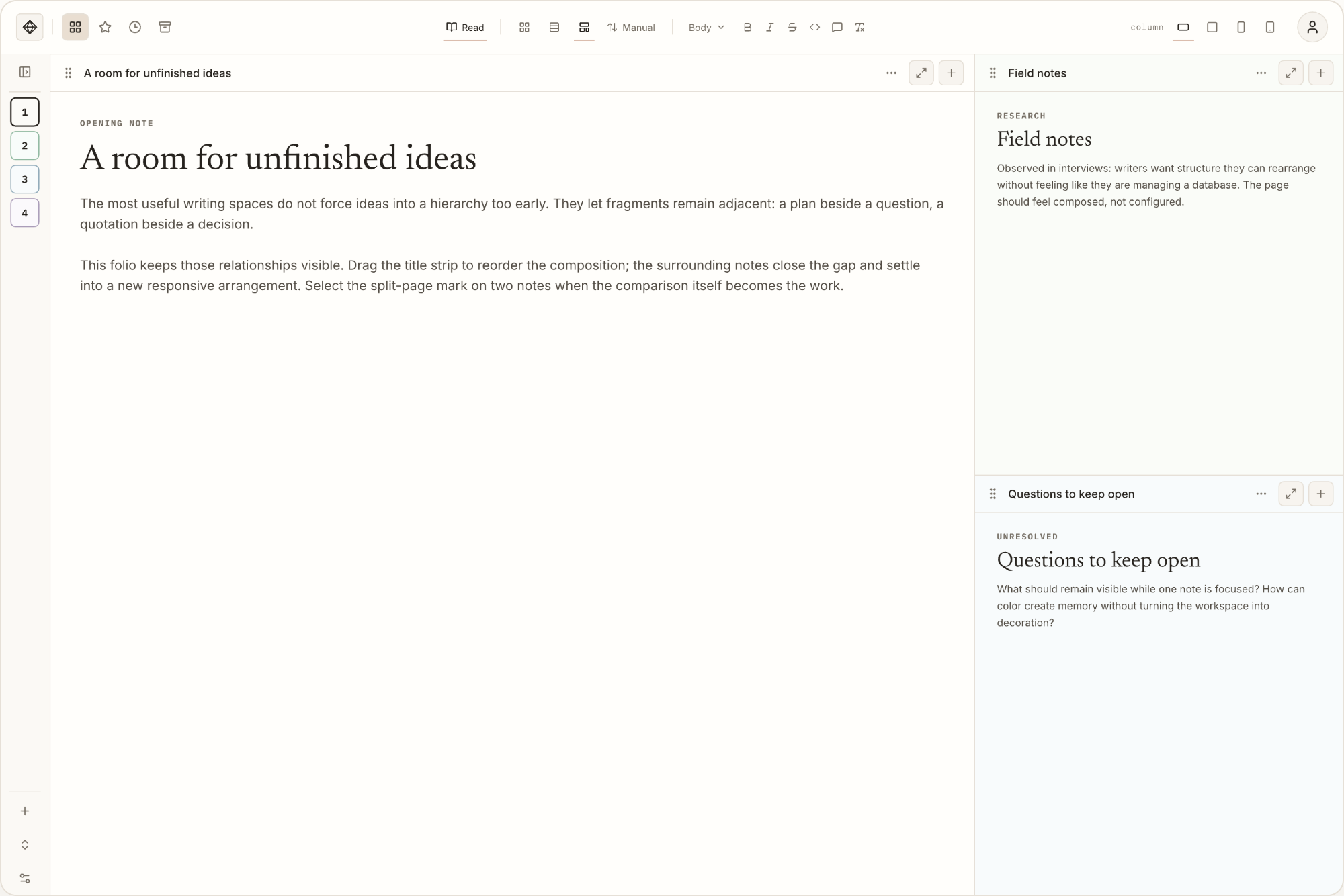
Notes tile edge to edge, colour-tinted, arranged by hand. Open one,
pair two, and close the tab knowing they’re just
.md files sitting in your own folder.
Notes tile edge to edge with no gutters. Drag a card by its top strip and drop it where it belongs. Position carries meaning: the thing you’re working on sits where you left it, not wherever “last modified” pushed it.
Open a note full-screen when you need the room. Pair it with a second when you’re writing from a source. Everything else stays exactly where it was, waiting.
Every note is a .md file in the folder you picked. Open
them in anything. Back them up however you already back things up.
There’s no export button because there’s nothing to export
from.
New to it? The start guide walks through opening a folder, writing, and arranging the wall.
No account to make. No server to trust. No sync, no telemetry, no “we’ve updated our terms”. Palladium runs in your browser and writes to your disk — if this page disappeared tomorrow, your notes would be exactly where you left them.
Palladium is built by one person and changes often. Leave your name and email, and I’ll reach out when something meaningful ships and ask for your feedback.
No account, no tracking.